


PARTY/STEALTH GAME
ASYMETRICAL COOP
3D
COMEDY
FOCUS ON ACCESS
⏱️ 3 months (with courses) 👥Main team of 6 ⚙️Unity
Two kids in a trenchcoat is a goofy couch-coop party game. You embody two children impersonating an adult to enter a party. Their goal is to have fun and do all the mischief they’ve planned - without getting caught.
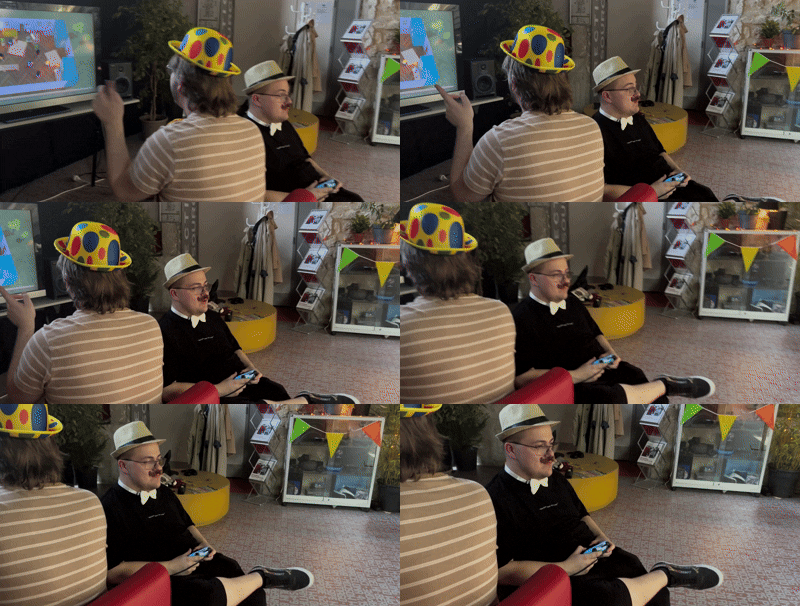
The twist is that only one player can see the screen while the other has the controller.

🙋♂️ What I did :
-Defining verbs, objectives & guests' behaviors
-Prototyping mini-games using Gdevelop
-8 fully implemented levels, with an onboarding
-Documentation
-Balancing (sus-meter, difficulty, objectives etc...)
🧩 What I've learned :
-Working as two game designers on a multiple months projects
-Working as a small team without a dedicated manager
-Level designing more efficiently on Unity
I also did the whole trailer :)

Game design
a. Vision
Two kids in a trenchcoat was made over 3 months (with courses) by a main team of 6 with a shared vision:

Low-tech
(Only one screen & gamepad needed)
Accessibility
(In terms of options, difficulty etc...)
Asymetry
(having two distinct & fun gameplay)
Goofyness
(funny dialogues, giberish voice, clumsy movement etc...)
We were two game designers on the team, and those pillars helped us tackle most design questions we had during the project; the main recurring one was:
How to avoid players' frustration from being deprived of either sight or direct control?
So we build the entire gameplay loop around avoiding these potential frustrations.

Me
My colleague Madeleine
Two gds in a trenchcoat
b. Gameplay loop
Each player has its own gameplay loop and crucial decision to make, to ensure both are always busy and having fun. Player 1 constantly analyses the room and guides his friend. Player 2 is always trying to keep the character balance, manifested by haptic feedback.


☝️
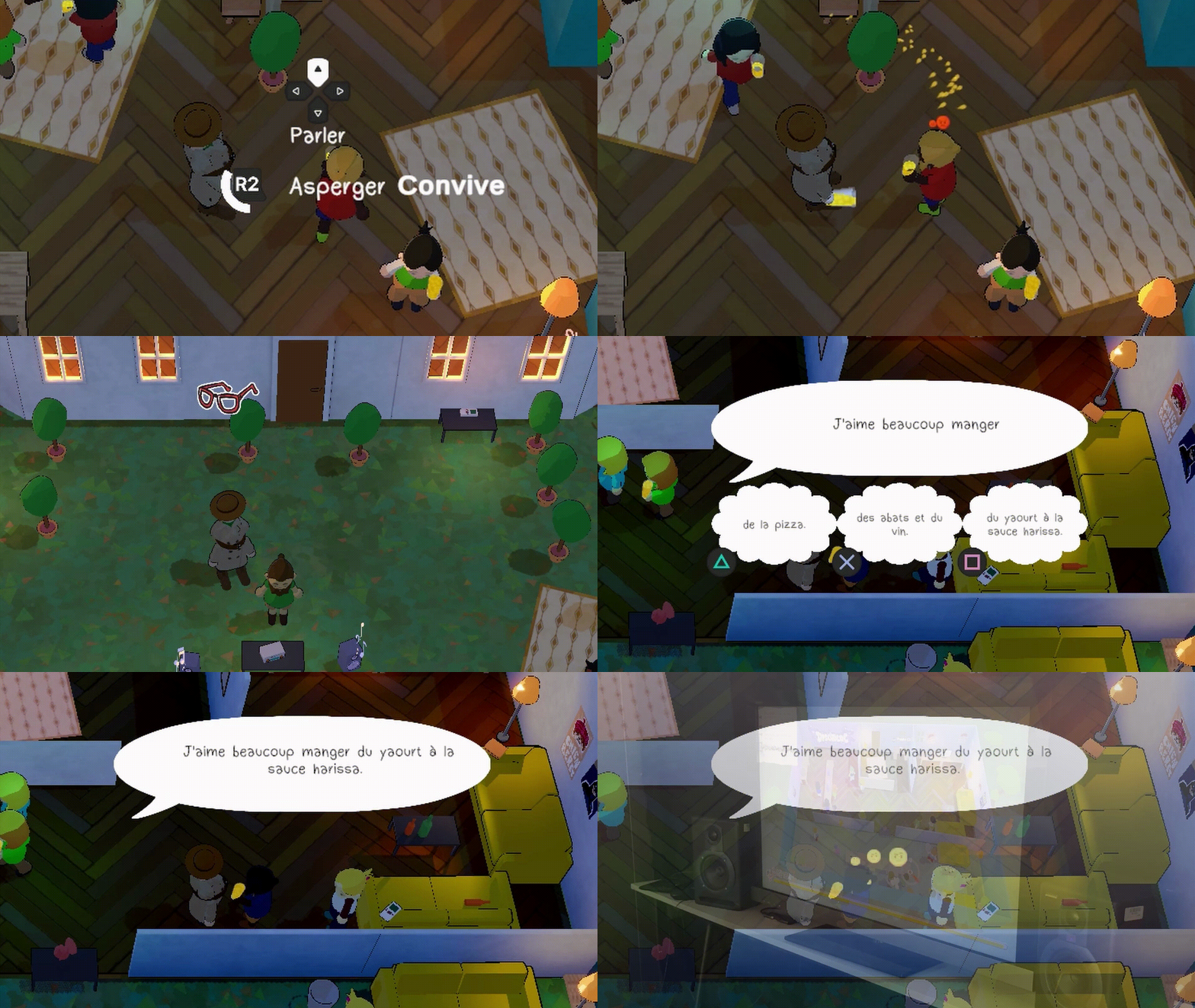
Players have to complete a list of objectives without getting caught. Guests' suspicion is represented by a bar at the bottom of the screen, it increases when acting weird and is reduced by acting like an adult, for example talking about your "job".
☝️


The game features 3 main interactions that most objectives are based upon :
-Talking with guests, assembling words to build a sentence, making the guests happy, angry, confused or shocked; impacting the sus-meter in various ways.
-Pickpocketing, pressing a series of buttons simultaneuously, and releasing them at the right time to avoid getting caught hand in the pocket!
-Moving objects around the room by holding the left trigger, for example grabbing a drink to spill over someone or a cd to change the level's music!
At the end of the game, either by successfully escaping or getting caught, players are rewarded with a stamps menu, highlighting their game funniest moments!

c. Documentation
For the game design documentation we used Google docs and adopted a "wiki" format. We've also made multiple one-pagers that act as efficient reminders.


👈
👉
d.Prototyping
Early during the development, to decide which minigames we would add to the game we made several prototypes, I made one of them for the pickpocket minigame, which was finally kept since the playtests went well.


e.Onboarding


During the second half of the development we specialised our work. While my colleague was focusing on the content design (writing the dialogues, more game stamps, item pool etc...) I was focused on the level design, making all the different parties.
Level design
a. Pillars & constraints
For level designing efficiently, I set myself some guidelines each level should follow:
Unique identity
Each level has a distinct theme and pool of objectives
1
Open area
Each level features multiple pathways to objectives
2
Quick to navigate
Going from each side of the level shouldn't take long
3
Lot of stuff
Each level allows many interactions and takes a bit of time to read properly, especially on hard difficulty.
4
Easy level
📝2 objectives, close to each other.
🧱 Few obstacles
🚶♀️ Few moving guests
Medium level
📝 3 objectives
🧱 + obstacles
🚶♀️ + moving guests
Hard level
📝 4 objectives
🧱 ++ obstacles
🚶♀️ ++ moving guests
b. Process


Step by step design of the easy level "Small committee"
c. Levels overview


